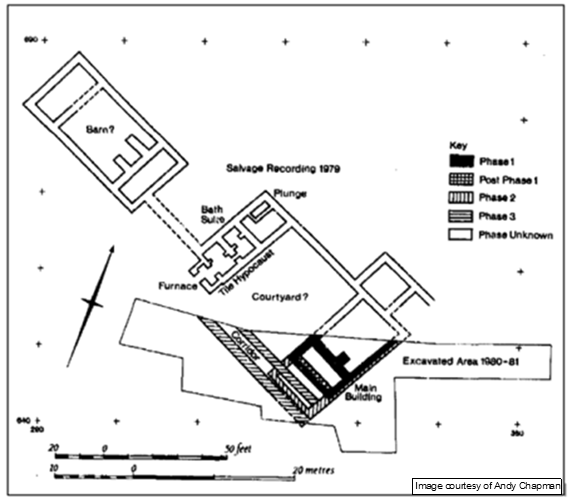
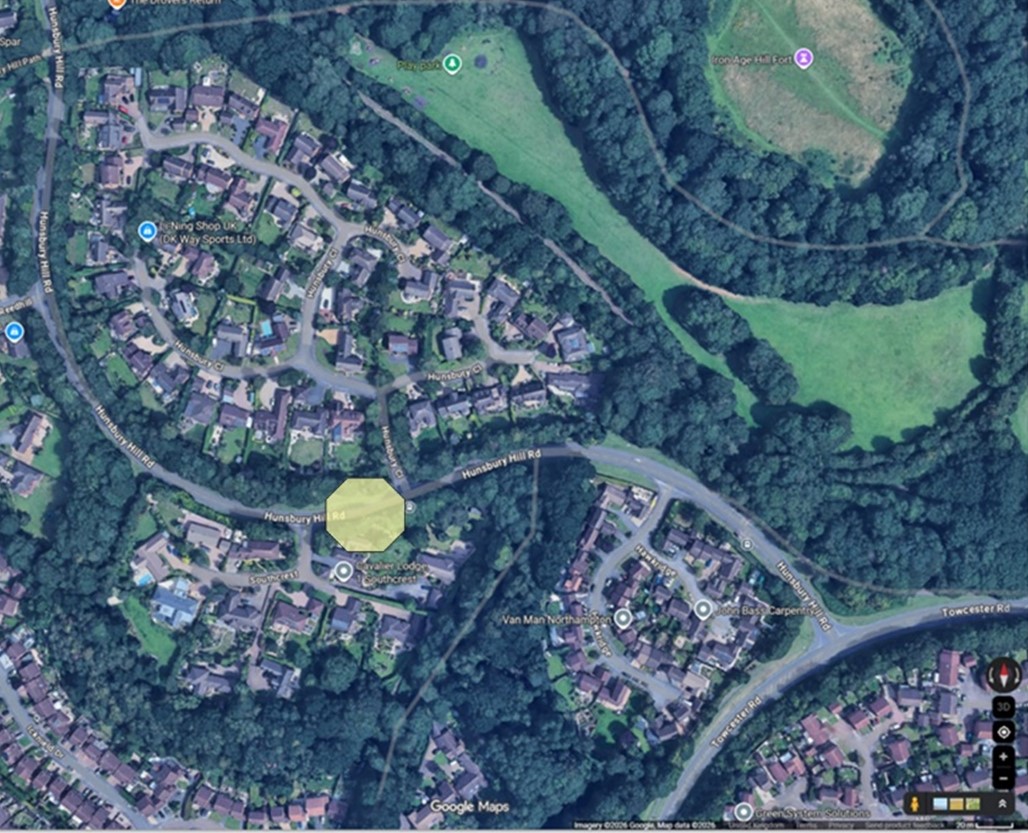
A Roman villa was discovered on Hunsbury Hill in 1973 South-West of, and within 200m of, the Iron Age Hillfort. Northampton Development Corporation (NDC) carried out an exploratory excavation and found that much damage had been caused from ploughing. Further archaeological excavations were carried out 1979-81 during the development of West Hunsbury, and particularly the construction of Hunsbury Hill Road, Hunsbury Close, and Southcrest.
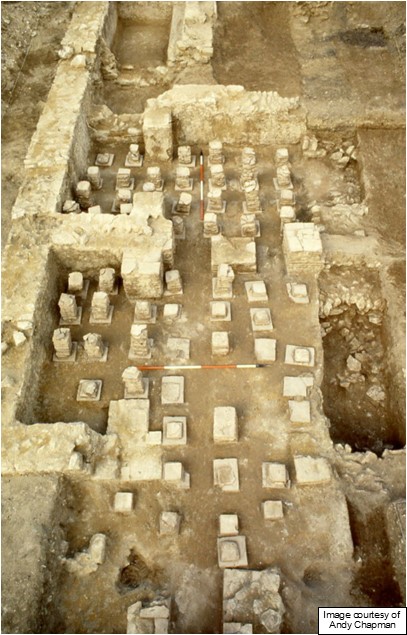 The excavations revealed an extensive bath-house, with a good example of a Roman hypocaust system providing underfloor heating.
The villa probably originated in the 2nd century AD and was extended in the 3rd or 4th century to include a bath suite of three rooms, two of which were heated by the hypocaust system. The third room comprised a cold plunge pool.
A number of artefacts were recovered during the excavations, now mostly stored in the Archaeological Resource Centre at Chester House, although a particularly striking and rare fragment of wall plaster showing part of a woman’s face has been used by Northampton Museum as the primary artefact to promote their ‘100 Objects’ exhibition (September 2025 – February 2026).
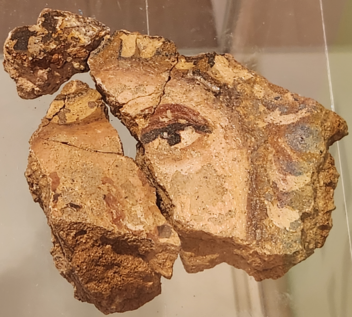
This piece of wall plaster is rare because it is the only depiction of a woman’s (or goddess’) face found to date in Roman Northamptonshire.