This is the second in the Friends of West Hunsbury Parks series of Fun Facts, let us know if you found them interesting.
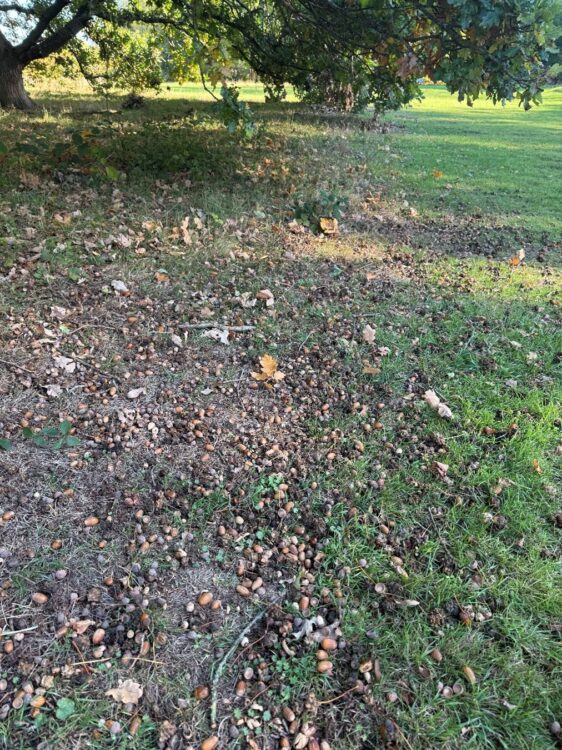
Have you noticed an abundance of acorns and conkers in the parks? If you walk under an oak tree at the moment, the ground is full of acorns, crunching beneath your feet. Ever wondered why there are so many this year? Read on and you’ll find out…….
The collective term for the fruits and nuts of beech, oak, chestnut, and other forest trees is ‘mast’ and when there is a wealth of nuts and seeds from these trees, like this year it’s called a ‘mast year’.
Squirrels, jays, mice and badgers feed on acorns and beechnuts and, during a mast year, there will be an increase in population of some of these species.
Mast years happen every 3 to 10 years, and according to the Woodland Trust, ‘the trees produce more food than the animals can possibly eat’, thus ensuring the survival of certain species of trees and small mammals.
Conversely, in the intervening years when there is a smaller crop, the trees are effectively keeping the populations of small mammal species in check.
Scientists also believe that mast years may be weather related – particularly during the spring months. Dr Andrew Hacket Pain, from the University of Liverpool explains, ‘oak trees produce a similar number of flowers each spring, but the autumn’s crop depends on how many mature into ripe acorns’. Warm and dry springs, like we had this year, promote the pollination of oak flowers.
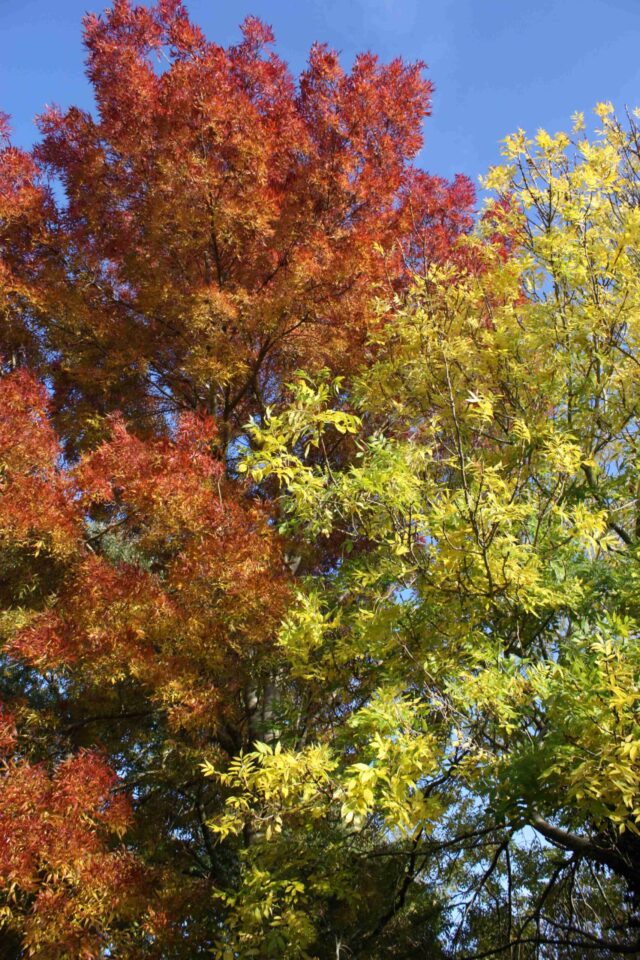
Our last mast year in the UK was 2020, and anyone who has been walking through our wonderful West Hunsbury parks this autumn will be aware, not only of the incredible colours, but also of the abundance of acorns, conkers, beechnuts and sycamore seeds marking another mast year, which also means there may be a few more squirrels and other small mammals around next year.